
Micro-CT Imaging and Quantitative Analysis for Dental Implant Research
Dental implant research requires a detailed understanding of implant geometry, surrounding bone structure, and the interaction between the implant and the adjacent tissue. Evaluating implant placement, bone quality, and the bone–implant interface is essential for investigating implant performance, osseointegration, and the biological response to different implant designs and surface modifications.
At KARA, we provide Micro-CT imaging and quantitative image analysis for dental implant research. High-resolution Micro-CT enables non-destructive three-dimensional visualization of dental implants and surrounding mineralized tissues, allowing researchers to investigate implant geometry, bone morphology, and the spatial relationship between implants and bone.
Depending on the study design and imaging resolution, Micro-CT datasets can be analyzed to evaluate parameters such as bone volume, bone volume fraction, trabecular thickness, trabecular number, trabecular separation, bone mineral density, implant volume, implant surface characteristics, and bone–implant interface parameters. These analyses can support the evaluation of osseointegration, implant stability, bone remodeling, and differences between implant designs, surface treatments, and experimental conditions.
Our services support a wide range of in vitro, ex vivo, and preclinical dental implant studies, including implant design evaluation, surface modification studies, osseointegration research, bone regeneration, bone–implant interaction, and the evaluation of novel implant materials and coatings.
What Can Be Evaluated?
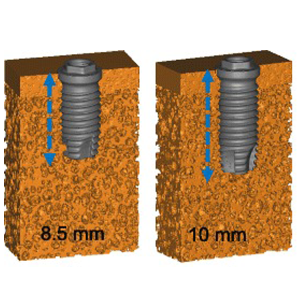
Bone–Implant Interface
Three-dimensional Micro-CT imaging can be used to visualize and analyze the spatial relationship between the implant and surrounding mineralized tissue. Depending on image resolution and segmentation quality, the bone–implant interface can be characterized in selected regions of interest.
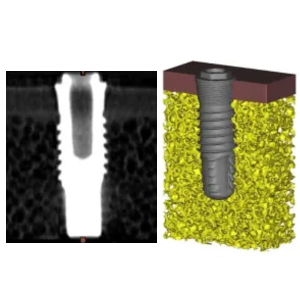
Bone–Implant Contact (BIC)
Bone–implant contact is an important parameter in implant research and is commonly used to assess the extent of bone formation directly adjacent to the implant surface. When imaging resolution and segmentation allow reliable separation of the implant and mineralized tissue, Micro-CT analysis can support three-dimensional assessment of the bone–implant interface.
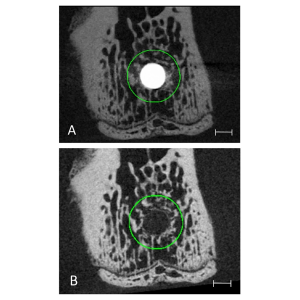
Peri-Implant Bone Analysis
Quantitative analysis of the bone surrounding an implant can provide information about local bone structure and remodeling. Researchers can define specific regions of interest around the implant to compare bone characteristics between different implant designs, treatments, or experimental time points.
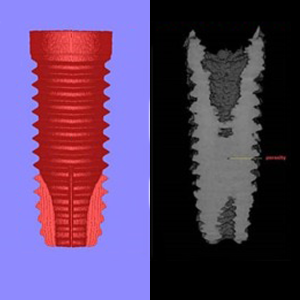
Implant Geometry and 3D Morphology
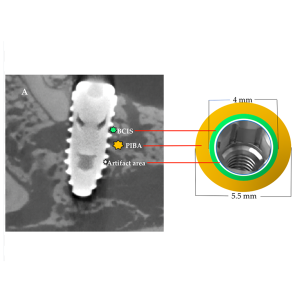
Three-dimensional reconstruction enables detailed visualization and analysis of implant geometry, including overall shape, dimensions, and spatial orientation. These reconstructions can also be used to create high-quality visualizations for scientific publications and presentations.
Implant Surface Characteristics
Depending on the imaging resolution, Micro-CT may support the assessment of surface morphology and selected structural characteristics of dental implants. Higher-resolution imaging may be required for detailed characterization of micro- and nano-scale surface features.
Osseointegration Assessment
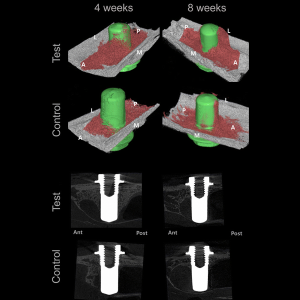
Micro-CT-based quantitative analysis can provide structural information relevant to the assessment of osseointegration by evaluating bone formation and mineralized tissue surrounding the implant. These measurements can be combined with other histological or mechanical assessments for comprehensive implant evaluation.

Bone Volume (BV)
Three-dimensional Micro-CT analysis can be used to quantify the volume of mineralized bone within a defined region of interest. Bone volume measurements can help researchers evaluate changes in bone formation, remodeling, and tissue response around dental implants.
Bone Volume Fraction (BV/TV)
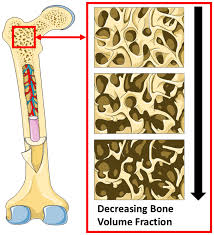
Bone volume fraction represents the proportion of bone volume within a defined total volume of interest. BV/TV is widely used to characterize bone quantity and can support comparisons of bone formation and remodeling between experimental groups.
Trabecular Thickness (Tb.Th)
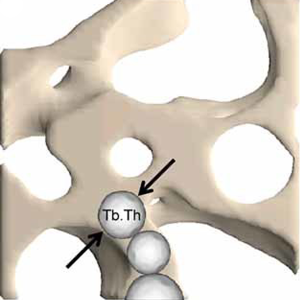
Trabecular thickness provides information about the thickness of the trabecular structures within cancellous bone. Quantitative analysis of this parameter can help researchers investigate changes in bone microarchitecture associated with implant placement and bone remodeling.
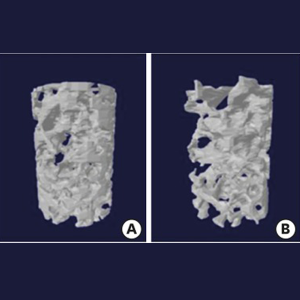
Trabecular Number (Tb.N)
Trabecular number describes the number of trabecular structures within a defined bone volume. Changes in trabecular number can provide information about alterations in bone microarchitecture and tissue response following implant placement.
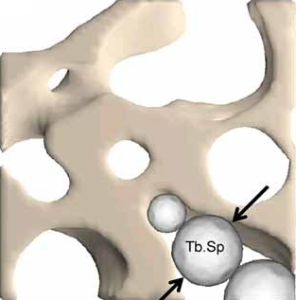
Trabecular Separation (Tb.Sp)
Trabecular separation represents the average distance between trabecular structures. Together with trabecular thickness and number, this parameter can be used to characterize three-dimensional bone microarchitecture around implants.
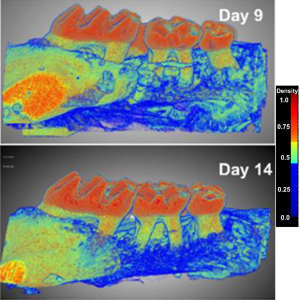
Bone Mineral Density (BMD)
Micro-CT-based analysis can be used to assess mineral density within bone when appropriate calibration and imaging protocols are available. Mineral density measurements can provide quantitative information about bone quality and mineralization around dental implants.
Research Areas
Supporting Research in
- Dental Implant Research
- Implant Design Evaluation
- Implant Surface Modification
- Osseointegration Studies
- Bone–Implant Interaction
- Peri-Implant Bone Analysis
- Bone Remodeling
- Bone Regeneration
- Implant Coatings
- Novel Implant Materials
- Implant Stability Research
- Preclinical Implant Studies