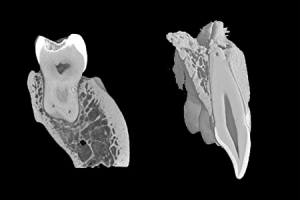
Micro-CT Applications
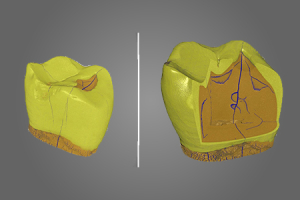
Our imaging and analysis workflows enable researchers to investigate the three-dimensional structure of dental hard tissues and quantify changes in mineral density, tissue thickness, lesion characteristics, porosity, and other structural parameters. These approaches can be used to evaluate treatment effects, compare experimental groups, and investigate structural changes in enamel and dentin while preserving the integrity of the samples.
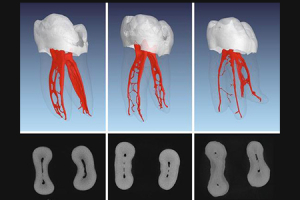
Depending on the objectives of the study, Micro-CT datasets can be analyzed to evaluate canal morphology, canal volume, surface area, dentin thickness, canal transportation, centering ability, filling quality, void distribution, and other quantitative parameters. These measurements provide objective data for comparing instrumentation systems, irrigation techniques, obturation methods, and endodontic materials.
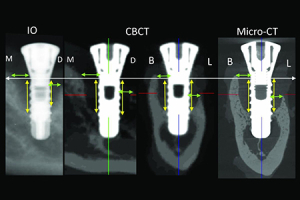
Micro-CT datasets can be analyzed to evaluate parameters such as bone volume, bone volume fraction, trabecular thickness, trabecular number, trabecular separation, bone mineral density, implant volume, implant surface characteristics, and bone–implant interface parameters. These analyses can support the evaluation of osseointegration, implant stability, bone remodeling, and differences between implant designs, surface treatments, and experimental conditions.
Micro-CT datasets can be analyzed to evaluate parameters such as material volume, porosity, pore size and distribution, surface area, interfacial gaps, material adaptation, structural integrity, and three-dimensional morphology. These analyses can support the development and evaluation of restorative materials, dental cements, scaffolds, bone substitutes, biomimetic materials, and other innovative dental biomaterials.
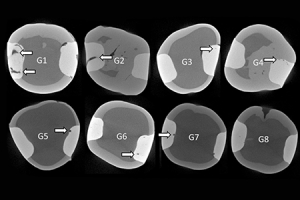
Depending on the study design and imaging capabilities, Micro-CT datasets can be analyzed to evaluate parameters such as mineral density, mineral loss, lesion depth, lesion volume, tissue thickness, and three-dimensional structural changes. These measurements can support the comparison of control and treatment groups and help researchers evaluate the effectiveness of remineralization strategies.
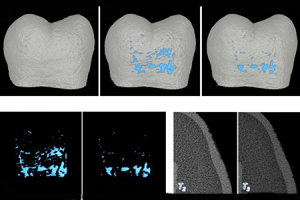
Micro-CT datasets can be analyzed to evaluate parameters such as bone volume, bone volume fraction (BV/TV), bone mineral density, trabecular thickness, trabecular number, trabecular separation, cortical bone thickness, bone loss, defect volume, and three-dimensional defect morphology. These measurements can support the evaluation of periodontal disease models, bone remodeling, bone regeneration, graft materials, scaffolds, and regenerative treatments.